
How to Co-Host on Airbnb: A Complete Guide
Everything you need to know about Airbnb co-hosting: how to become a co-host, co-host responsibilities, compensation models, and cleaning coordination.
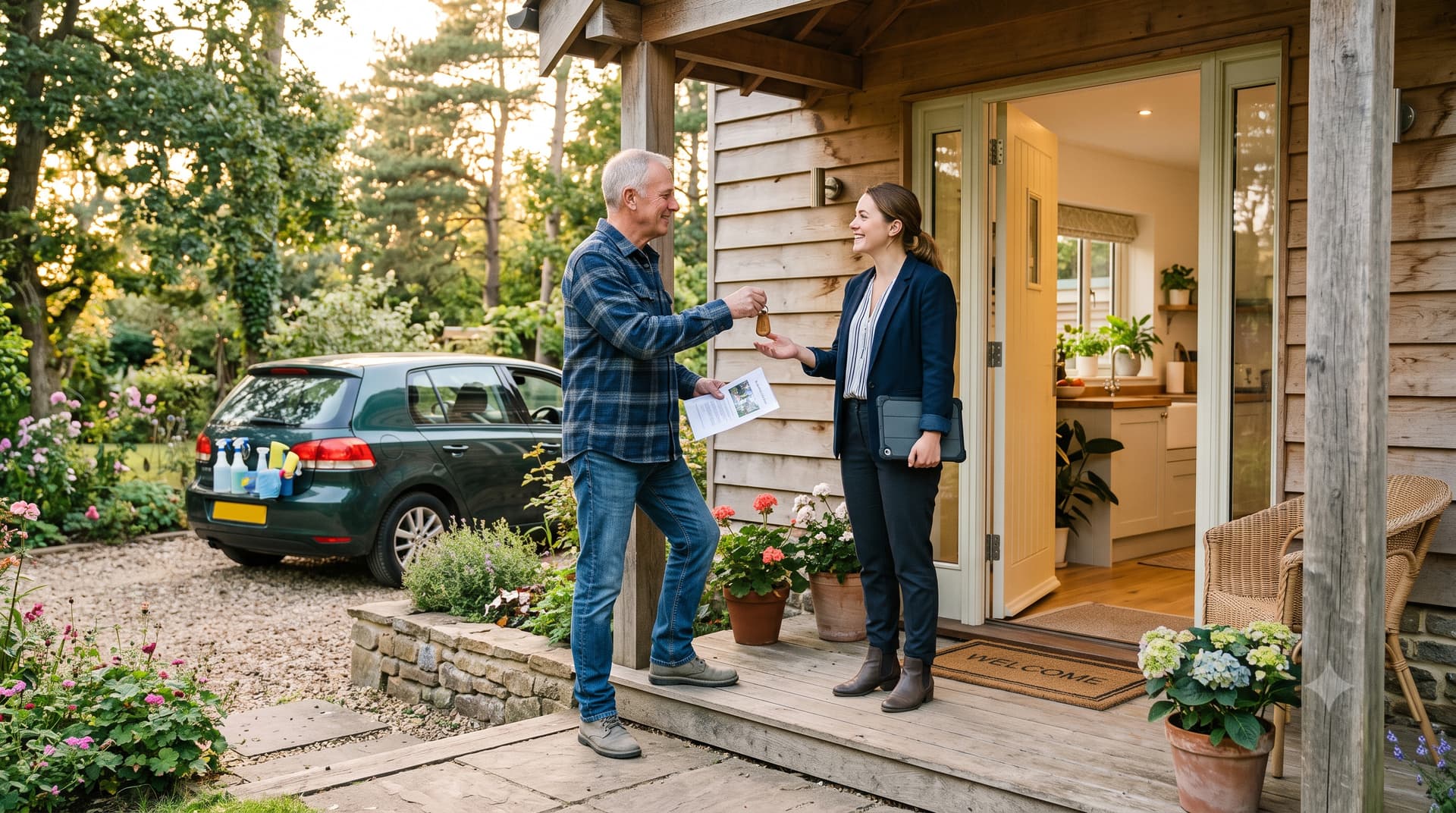
An Airbnb co-host is a person you invite to help manage one or more of your listings. They get access to your hosting dashboard (with permissions you control), can message guests on your behalf, coordinate cleaning and maintenance, adjust pricing, and respond to issues during the stay. Airbnb introduced the co-host feature to formalize the arrangement that many hosts were already running informally: having a friend, family member, or local contact help manage their property.
Co-hosting works in two directions. If you own a property but do not have the time or proximity to manage it daily, you add a co-host. If you do not own a property but want to earn money in the vacation rental space, you become a co-host for property owners in your area.
This guide covers both sides: how to add a co-host to your listing (for property owners), how to become a co-host and build a co-hosting business (for aspiring co-hosts), and how to handle the operational complexity that comes with managing multiple properties across different owners.
How Do You Add a Co-Host to Your Airbnb Listing?
Adding a co-host takes about 5 minutes through Airbnb's hosting dashboard.
Step by step
- Go to your listing on Airbnb
- Navigate to Listing settings or Co-hosts
- Click Invite a co-host
- Enter the co-host's email address (they must have an Airbnb account)
- Set their permissions (what they can and cannot do)
- Set their payout split (percentage or flat fee per booking)
- The co-host receives an email invitation and accepts
Permission levels
Airbnb lets you control what your co-host can do:
- Full access: They can manage bookings, message guests, adjust pricing, modify the listing, and coordinate cleaning. This is the standard for a co-host who handles all operations.
- Limited access: They can message guests and manage bookings but cannot change listing details or pricing. Good for a co-host who only handles guest communication.
Payout split options
Airbnb handles co-host payouts directly. You set the split when you add the co-host:
- Percentage of booking revenue: The co-host receives a set percentage of each booking payout. Typical range: 10% to 25%.
- Flat fee per booking: The co-host receives a fixed amount per reservation regardless of the nightly rate.
The percentage model is more common because it aligns incentives: the co-host earns more when bookings are more valuable, which motivates them to optimize pricing, reviews, and occupancy.
What Are the Typical Co-Host Responsibilities?
Co-host responsibilities vary based on the agreement between the property owner and the co-host. The most common arrangements fall into three tiers.
| Tier | Responsibilities | Typical Compensation | Best For |
|---|---|---|---|
| Communication only | Guest messaging, inquiry responses, review management | 10% to 15% of booking revenue | Owners who handle operations but need coverage for response time / time zones |
| Communication + operations | Everything above plus cleaning coordination, maintenance requests, key management, restocking | 15% to 20% of booking revenue | Remote owners who need a local person managing the property day to day |
| Full management | Everything above plus pricing optimization, listing updates, calendar management, professional photography coordination | 20% to 25% of booking revenue | Passive owners who want completely hands-off hosting |
The cleaning coordination challenge
For co-hosts managing multiple properties across different owners, cleaning coordination is the biggest operational challenge. Each property has:
- Its own cleaner (or the owner's preferred cleaner)
- Its own cleaning checklist and standards
- Its own Airbnb and VRBO calendars
- Its own turnover timing and same-day booking patterns
At 1 to 2 co-hosted properties, text-based cleaner coordination works. At 3 or more, you need automated turnover notifications. GleamSync connects to each property's Airbnb and VRBO calendars and sends the assigned cleaner automated notifications with the exact checkout time, check-in time, and property address for every turnover. The co-host does not need to check each owner's calendar individually or manually text each cleaner.
For more on the tools that handle multi-property operations, see our Airbnb automation guide.
How Do You Become a Co-Host?
If you do not own a vacation rental but want to earn income in the space, co-hosting is the lowest-barrier entry point. You bring your time, local knowledge, and hosting skills. The property owner brings the property.
Finding property owners who need co-hosts
-
Your local network. Friends, family, and neighbors who own vacation rentals but are overwhelmed by the operational work. Many owners hired a property management company, are unhappy with the fees (25% to 40% of revenue), and would welcome a more affordable co-host arrangement.
-
Airbnb's co-host marketplace. Airbnb has introduced features connecting property owners with co-hosts in their area. Check your local Airbnb hosting dashboard for co-hosting opportunities.
-
Local Airbnb host Facebook groups. Property owners routinely post in these groups looking for local help. Position yourself as an experienced, reliable operator who can handle guest communication and turnover coordination.
-
Real estate agents and property investors. Investors who buy vacation rental properties as investments often do not want to manage them. A co-hosting pitch to a local real estate agent who works with investors can generate multiple properties quickly.
Building your co-host pitch
Property owners care about three things:
-
Will you protect my reviews? Show that you understand guest communication, cleaning standards, and response time requirements. Reference your Superhost knowledge and the systems you use.
-
Will you be reliable? Show that you have systems for turnover coordination (not just "I will text the cleaner"). Mentioning automated cleaning notifications from GleamSync demonstrates operational maturity.
-
What will it cost me? Be clear about your percentage and what it includes. Compare your 15 to 20% rate to a property management company's 25 to 40% rate. You are the more affordable, more personal option.
What you need to start
- An Airbnb account (free)
- Local knowledge of your market
- A reliable cleaner in your area (or the willingness to work with the owner's existing cleaner)
- Communication tools: a phone, the Airbnb app, and optionally GleamSync for turnover automation
- Basic understanding of cleaning standards (our cleaning checklist is a good starting point)
For hosts considering hiring a cleaner, see our guide to finding and paying vacation rental cleaners.
What Should a Co-Hosting Agreement Include?
A written co-hosting agreement protects both the property owner and the co-host. It does not need to be a legal document drafted by a lawyer, but it should clearly cover:
- Scope of responsibilities. Exactly what the co-host handles and what the owner handles. Use the tier table above as a framework.
- Compensation. Percentage of booking revenue, flat fee per booking, or hybrid. Specify when payouts happen (Airbnb handles this automatically if configured in the co-host settings).
- Cleaning coordination. Who manages the cleaner? Who pays the cleaner? Is the co-host responsible for finding a backup cleaner if the primary one is unavailable?
- Maintenance responsibility. What maintenance issues does the co-host handle directly? What requires the owner's approval? What is the emergency budget the co-host can spend without asking?
- Quality standards. What cleaning checklist is used? Are post-clean photos required? What review score is the target?
- Termination. How either party can end the arrangement (typical: 30 days written notice).
- Listing control. Who controls pricing, listing content, photos, and house rules? Specify to avoid conflicts.
Frequently Asked Questions
Does the co-host get their own Superhost badge?
No. Co-hosted listings contribute to the primary host's Superhost metrics, not the co-host's. If you are a co-host building your own hosting track record, you need your own listing (even one property) to earn Superhost status independently.
Can I co-host for multiple property owners?
Yes. Many co-hosts manage properties for 3 to 10+ different owners. Each owner adds you as a co-host on their listing independently. The operational complexity scales with the number of properties, which is why automated cleaning coordination becomes essential at 3+ co-hosted properties.
Who is liable if something goes wrong at a co-hosted property?
AirCover for Hosts covers the primary host (property owner), not the co-host. The property owner's insurance should cover property damage and liability. As a co-host, consider general liability insurance (approximately $300 to $600/year) to protect yourself against claims that arise from your management activities.
How do I handle cleaning for co-hosted properties?
There are two models: use the owner's existing cleaner (most common and preferred) or bring your own cleaner. Either way, the co-host typically coordinates scheduling and quality control. For each property, the cleaner needs to receive turnover notifications with checkout times, check-in times, and any special instructions. GleamSync handles this automatically for each property independently, which means you are not manually coordinating across multiple owners' calendars.
Is co-hosting better than starting a property management company?
Co-hosting through Airbnb's built-in feature is simpler, lower-overhead, and does not require a business license in most jurisdictions (though check your local regulations). A property management company makes sense when you scale to 15 to 20+ properties and need trust accounting, owner reporting, and a more formal business structure. Most successful property managers started as co-hosts and transitioned as they grew.
Co-Hosting Multiple Properties Means Multiple Cleaners, Multiple Calendars, Multiple Turnovers.
Managing cleaning across several owners' properties is the hardest part of co-hosting. GleamSync connects to each property's Airbnb and VRBO calendars independently and sends each property's cleaner the notifications they need. You coordinate one system instead of five separate text threads.
Try GleamSync for $8/month per property, and keep the cleaner who already knows your place.
Start your free trial at gleamsync.com
Related reading:
Share this article

Mark Fromson
Founder of GleamSync and vacation rental owner. Learn more
Related Articles
Airbnb Deep Clean vs. Turnover Clean: When to Do Each
Airbnb deep clean vs turnover clean: what each includes, how often to schedule them, cost comparisons, and how to coordinate both with your cleaner.
How to Become an Airbnb Superhost: The Operational Playbook
A practical guide to earning and keeping Airbnb Superhost status. Covers all four requirements and the operational systems that keep you qualified.
Vacation Rental Maintenance Checklist: A Seasonal Guide
A seasonal vacation rental maintenance checklist for Airbnb and VRBO hosts. Monthly, quarterly, and annual tasks for HVAC, plumbing, safety, and appliances.
Simplify Your Cleaning Coordination
Sync Airbnb, VRBO, Booking.com or any calendar with a link, notify your cleaners automatically, and never miss a turnover.
Start Free Trial