
How to Start an Airbnb Cleaning Business in 2026
How to start an Airbnb cleaning business, from equipment and pricing to finding clients and scaling to 10+ properties. A guide for independent cleaners.
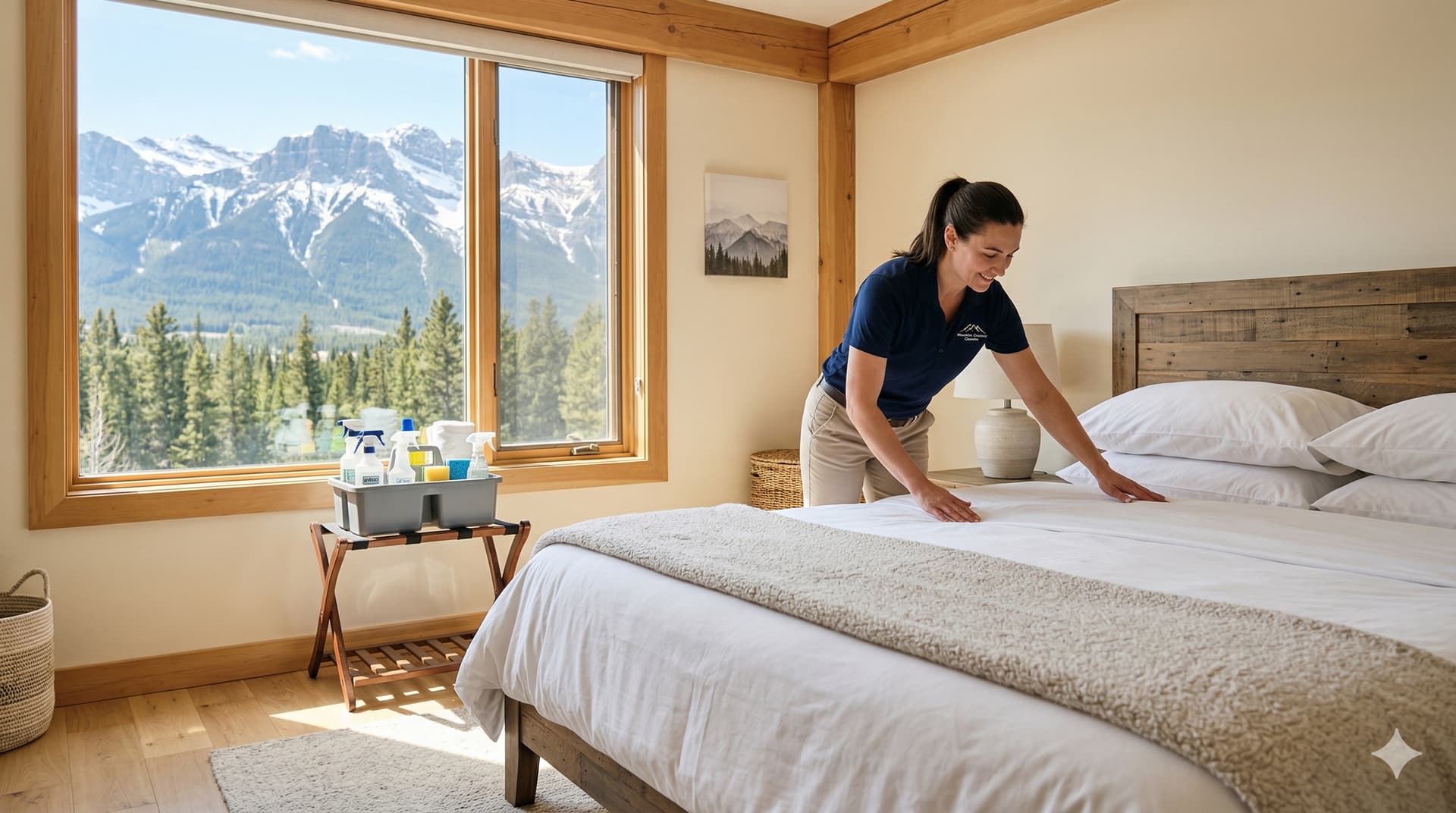
The Airbnb cleaning business is one of the lowest-barrier, highest-demand opportunities in the service industry right now. Short-term rental hosts need reliable cleaners, and most of them would rather work with an independent professional they trust than a faceless cleaning marketplace.
This guide is written for you: someone who wants to build an Airbnb cleaning business on your own terms. Not as a gig worker assigned random jobs through an app, but as an independent cleaner who builds direct relationships with vacation rental hosts and controls your own schedule, pricing, and growth.
If you're starting from scratch or transitioning an existing cleaning business into the vacation rental niche, this is everything you need to know.
Why Is Airbnb Cleaning a Growing Business Opportunity?
Vacation rental cleaning is a growing business opportunity because the short-term rental market continues to expand, and every property needs cleaning between guest stays, no exceptions.
Unlike traditional house cleaning, Airbnb turnover cleaning is driven by booking frequency, not seasonal deep-clean schedules. A single property with 20 turnovers per month needs 20 cleans. Hosts can't skip it: a dirty property means bad reviews, and bad reviews mean lost bookings. That urgency makes vacation rental cleaning one of the most recession-resistant service businesses you can start.
This is why the timing is especially good for independent cleaners:
Hosts prefer trusted independents over marketplaces
Most experienced Airbnb and VRBO hosts don't want to roll the dice on a different cleaner every turnover. They want someone who knows their property, follows their specific checklist, and can be trusted with the lockbox code. That's you, not a marketplace dispatch.
Demand outstrips supply in most markets
In popular vacation rental destinations, hosts routinely struggle to find reliable cleaners. The work is physical, time-sensitive, and requires attention to detail. Cleaners who deliver consistent five-star results are worth their weight in gold to hosts, and they'll pay accordingly.
The economics are simple
You set your rate per clean. You collect payment directly from the host. Your overhead is low: cleaning supplies, transport, and insurance. There's no franchise fee, no platform commission, and no middleman taking a cut of your earnings.
How Do You Get Started as an Airbnb Cleaner?
Getting started as an Airbnb cleaner requires three things: basic equipment, a clear pricing structure, and your first client. You don't need formal training, a business degree, or expensive certifications.
Equipment and supplies
Your startup supply list is easy to put together. Most independent cleaners launch with under $500 in equipment:
- Cleaning caddy or carry-all: portable, organized, ready to move between rooms quickly
- Vacuum cleaner: a reliable upright or lightweight cordless model works for most properties
- Mop and bucket: microfiber flat mops are the industry standard for hard floors
- Cleaning solutions: all-purpose cleaner, glass cleaner, bathroom disinfectant, stainless steel cleaner, and toilet bowl cleaner
- Microfiber cloths: buy in bulk (at least 20), color-coded by area (kitchen, bathroom, general surfaces)
- Rubber gloves: disposable nitrile gloves for bathroom work, reusable rubber gloves for kitchen
- Trash bags: large (kitchen) and small (bathroom) sizes
- Laundry supplies: detergent, stain remover, dryer sheets (many turnovers include linen laundering)
- Restocking inventory: toiletries (shampoo, conditioner, soap), paper products (toilet paper, paper towels), coffee pods, dish soap
One important note: every property is different. Some hosts provide all restocking supplies and expect you to place them. Others expect you to supply consumables and bill separately. Clarify this before your first clean.
Setting your pricing
The vacation rental cleaning industry prices per job, not per hour. This is important: per-hour pricing penalizes fast, efficient cleaners and creates uncertainty for the host.
Standard turnover pricing by property size in 2026:
- Studio / 1-bedroom: $85–$130
- 2-bedroom: $130–$180
- 3-bedroom: $180–$250
- 4-bedroom and larger: $250–$400+
These ranges reflect a standard turnover clean: full surface wipe-down, bathroom sanitization, fresh linens, kitchen reset, floor cleaning, trash removal, and restocking. Deep cleans (oven interiors, baseboards, window tracks, grout scrubbing) are typically priced separately at a 50–100% premium over the standard turnover rate.
Additional pricing factors to consider:
- Same-day turnovers: charge a 20–25% rush premium when the window between checkout and check-in is under 4 hours
- Laundry service: if you're laundering linens on-site or off-site, price this as a line item ($20–$40 per load)
- Restocking: bill consumables at cost plus a reasonable handling markup, or negotiate a flat monthly restocking fee
- Pet-friendly properties: charge $15–$30 extra for properties that allow pets (additional vacuuming, lint rolling, odor treatment)
Research what other cleaners in your specific market charge. Pricing varies significantly by region, a turnover clean in a ski resort town commands higher rates than the same clean in a suburban market.
Registering your business
You don't need to overcomplicate this at launch, but taking a few basic steps protects you and looks professional:
- Choose a business structure: a sole proprietorship is the simplest starting point in most U.S. states and Canadian provinces. You can upgrade to an LLC or corporation later as you grow.
- Register your business name: check your state or provincial registry for availability and file the necessary paperwork.
- Get a business bank account: separate your business income and expenses from personal accounts from day one. This makes tax time dramatically easier.
- Obtain required licenses: requirements vary by jurisdiction. Some states require a general business license; others have specific cleaning service permits. Check your local government's business portal.
- Get liability insurance: general liability insurance typically costs $300–$600 per year for a solo cleaning business. It protects you if you accidentally damage a host's property during a clean. Many hosts will require proof of insurance before giving you a contract.
How Do You Find Your First Airbnb Cleaning Clients?
Finding your first clients is the biggest hurdle, but it's also simpler than most people think. The vacation rental hosting community is surprisingly tight-knit, and word-of-mouth is the primary way hosts find cleaners.
Start with your local network
Your first client is almost certainly someone you already know, or someone one degree removed. Think about:
- Friends, family, or neighbors who host on Airbnb or VRBO
- Local real estate agents who manage short-term rentals
- Property managers in your area
- Anyone in your social circle who has mentioned vacation rental hosting
Approach them directly: "I'm starting an Airbnb cleaning business. If you ever need a reliable cleaner, or know someone who does, I'd love the opportunity." One satisfied host becomes three referrals becomes ten contracts. This is how nearly every successful independent cleaner started.
Join local Airbnb host Facebook groups
Every market has at least one Facebook group where local Airbnb and VRBO hosts exchange tips, vent about guest behavior, and, critically, ask for cleaner recommendations. Find these groups and join them.
Don't immediately post "Hire me!" Instead:
- Participate in conversations. Answer questions. Be helpful.
- When someone posts "Looking for a reliable cleaner in [your area]," respond with your experience and availability.
- After building some credibility, post a brief introduction about your cleaning business with before-and-after photos of your work.
This is the single most effective free marketing channel for vacation rental cleaners.
Contact Superhosts directly
Airbnb Superhosts are hosts who have met high standards for responsiveness, ratings, and booking volume. They're serious about their properties, and they're the most likely to pay well for quality cleaning.
You can identify Superhosts by browsing Airbnb listings in your area and looking for the Superhost badge. Contact them through the Airbnb platform's "Contact Host" feature, or look for their property management company name and reach out directly.
Create a Google Business Profile
A Google Business Profile (free) helps local hosts find you when they search for "Airbnb cleaning [your city]." Include:
- Your business name and service area
- Services offered (turnover cleaning, deep cleaning, laundry, restocking)
- Photos of your work (before-and-after shots are compelling)
- Your phone number and email
Encourage every client to leave a Google review. Five positive reviews make you stand out dramatically against competitors with zero online presence.
Additional channels worth exploring
- Local Airbnb meetups and hosting workshops: show up, network, hand out business cards
- Craigslist and local classified boards: post in the "Services" section for your area
- Nextdoor: neighborhood-based platform where hosts often post looking for local services
- Property management companies: they manage multiple properties and need cleaning teams on retainer
What Should an Airbnb Cleaning Contract Include?
A cleaning contract protects both you and the host. It sets clear expectations so there's no confusion about what you're responsible for, what you'll be paid, and how the relationship works.
You don't need a lawyer to draft a basic cleaning contract. A clear, written agreement covering these elements is sufficient:
Essential contract elements
- Scope of work: exactly what's included in a standard turnover clean (surface cleaning, bathroom sanitization, linen change, kitchen reset, floor cleaning, trash removal, restocking) and what's not included (deep cleaning, exterior work, maintenance tasks)
- Pricing: your rate per standard turnover by property size, pricing for add-on services (deep clean, laundry, same-day rush), and how restocking costs are handled
- Payment terms: when you get paid (per clean, weekly, biweekly, or monthly) and your accepted payment methods (e-transfer, check, direct deposit)
- Cancellation policy: what happens when a booking cancels after you've been scheduled (industry standard: 24-hour notice required, otherwise full cleaning fee applies)
- Access details: how you access the property (lockbox code, smart lock, key handoff) and who's responsible for providing access
- Scheduling: how you receive cleaning assignments (text, email, automated notification from the host's calendar system) and your typical turnaround time for confirming availability
- Quality standards: the host's specific checklist for the property, photo documentation requirements if any, and the process for handling complaints or re-cleans
- Term and termination: how either party can end the arrangement (typical: 14–30 days written notice)
A signed contract also signals to hosts that you're professional and serious. It separates you from the casual "I'll clean your place for cash" offerings and justifies your premium pricing.
How Do You Scale from 1 Property to 10 or More?
Scaling an Airbnb cleaning business from a single property to 10+ is where the real income potential lives. A solo cleaner servicing 10 properties with an average of 8 turnovers per month each, at $150 per clean, generates $12,000 in monthly revenue. That's a real business.
But scaling introduces operational complexity that didn't exist when you had one property and one host texting you.
Build systems before you need them
The biggest mistake growing cleaners make is waiting until they're overwhelmed to build systems. Start early:
- Use a shared calendar: Google Calendar or a similar tool where you can see all upcoming turnovers across all your properties in one view
- Create property-specific checklists: every property has quirks (specific thermostat settings, lockbox locations, linen closet organization). Document these in a checklist for each property so you, or a future team member, can execute consistently
- Track your finances: use simple bookkeeping software to track income and expenses per property. You need to know which contracts are profitable and which aren't
- Photograph your work: take a quick photo set after every clean. This protects you against complaints and builds a portfolio for marketing
Hire your first subcontractor
Once you're consistently at capacity (you're turning down work or rushing between cleans), it's time to bring on help. Most cleaning businesses start by subcontracting to a trusted friend or colleague before hiring employees.
When you subcontract:
- Pay a fair rate: typically 60–70% of the cleaning fee goes to the cleaner, 30–40% stays with you as the business owner covering overhead, scheduling, and client management
- Train them on your standards using the property-specific checklists you've already built
- Quality-check their first several cleans with post-clean photo reviews
- Maintain the host relationship yourself: you are the point of contact, not your subcontractor
Manage scheduling and communication
This is where most growing cleaning businesses break down. When you had 2 properties, text messaging worked fine. At 8 properties with 2 cleaners, it's chaos.
Hosts increasingly use tools that automatically notify their cleaners when a booking creates a turnover window. GleamSync, a vacation rental cleaning coordination SaaS, syncs directly with Airbnb and VRBO calendars and sends automated email, SMS, and WhatsApp notifications to cleaners whenever a new turnover is detected, no more last-minute texts or missed messages.
For cleaners, this means you get a reliable, automated heads-up every time a property needs cleaning, with the exact checkout and check-in times. You don't need to download an app or create an account, notifications come to you via the email and phone number your host has on file.
The hosts who invest in this kind of coordination are the best clients to work with: they're organized, they respect your time, and they're committed to the long-term relationship.
Know when to raise your prices
As demand for your services increases, your prices should reflect that. Raise your rates when:
- You're turning down new clients because you're at capacity
- You've been cleaning for a host for 6+ months without a rate adjustment
- Your costs have increased (fuel, supplies, insurance renewals)
- You're adding a same-day rush fee that didn't exist when the host first hired you
Give 30 days' notice for rate changes. Most hosts expect annual rate adjustments and would rather pay more than lose a reliable cleaner.
What Tools Make Airbnb Cleaning Easier?
The right tools make your day more efficient and your business more professional. This is what experienced vacation rental cleaners actually use in the field:
Cleaning execution tools
- A reliable vehicle: you'll drive between properties multiple times per day. Keep your cleaning supplies organized in your car so you can load in and start cleaning within minutes of arrival.
- Portable Bluetooth speaker: cleaning is physical work, and music makes it better. Invest in a small waterproof speaker.
- Timer app: track how long each property takes. This data informs your pricing and helps you estimate turnaround times when scheduling.
- Before-and-after photo routine: use your phone to document each clean. Many cleaners use the timestamp camera feature or a simple photo documentation app.
Business management tools
- Bookkeeping software: QuickBooks Self-Employed, Wave (free), or a simple spreadsheet. Track every dollar in and out.
- Invoicing: many hosts prefer to pay per clean with a proper invoice. Use Wave, Square Invoices, or even a simple recurring e-transfer arrangement.
- Communication with hosts: whatever your hosts use, meet them there. Most use text or email. Some use automated notification systems like GleamSync ($8/month per property, paid by the host: free for you as the cleaner) that send you turnover details by email, SMS, or WhatsApp automatically.
- Scheduling and calendar: Google Calendar for solo operations. As you scale, your hosts' coordination tools handle the scheduling complexity for you.
The independent cleaner's advantage
This is something the big cleaning marketplaces won't tell you: the most successful Airbnb cleaners aren't marketplace workers. They're independent professionals with direct host relationships, premium pricing, and complete control over their schedules.
When you build your business around direct relationships instead of platform assignments, you earn more per clean, you choose which properties to take on, and you're not competing on price with every other cleaner in the marketplace. Your reputation becomes your moat.
Frequently Asked Questions
How much can I earn with an Airbnb cleaning business?
Earnings vary based on your market, property sizes, and volume. A solo cleaner servicing 5–10 turnovers per week at $100–$200 per clean can earn $2,000–$8,000 per month. Cleaners who build a team and service 15+ properties often surpass $100,000 per year in revenue.
Do I need any certifications or training to clean Airbnb properties?
No formal certifications are required. Vacation rental hosts care about results, consistent five-star cleans and reliable scheduling. That said, completing a basic cleaning or hospitality course can help you refine your techniques, and listing a certification on your marketing materials adds credibility.
How is Airbnb cleaning different from regular house cleaning?
Airbnb turnover cleaning is time-sensitive, checklist-driven, and focused on guest-ready presentation. Unlike regular house cleaning (which happens on a flexible schedule for the homeowner), vacation rental turnovers often happen in tight windows between guest checkout and the next check-in, sometimes just 3–4 hours. You need to fully reset the property so it looks untouched: fresh linens, restocked supplies, clean surfaces, no trace of the previous guest. For a deeper look at how these windows work, see our guide on understanding vacation rental turnover clean windows.
Can I start an Airbnb cleaning business part-time?
Yes, most cleaners start part-time alongside other work. Airbnb turnovers are concentrated around checkout times (typically 10 AM. 11 AM), so you can schedule cleans during a mid-morning window and keep evenings free. As you add properties, you'll naturally reach a point where the cleaning income justifies going full-time.
What should I do if a host asks me to join a cleaner marketplace instead of working with me directly?
Some hosts use marketplace platforms that assign cleaners to properties automatically. The trade-off is real: you may get more leads, but you lose pricing control, schedule autonomy, and the direct relationship that generates referrals. Many experienced cleaners maintain direct host relationships as their primary business and use marketplaces only to fill schedule gaps. The choice depends on your priorities, but building your own client base always pays better long-term.
Your Best Clients Use Systems, Not Last-Minute Texts
You've done the hard part: building a cleaning business that hosts trust and rely on. But you're still at the mercy of whoever remembers to text you about the next turnover.
The best host clients are the ones who automate the coordination: so you always know what's coming, when it's coming, and where you need to be.
GleamSync connects to your host's Airbnb and VRBO calendars, detects every turnover window automatically, and sends you the details by email, SMS, or WhatsApp: with the exact checkout time, check-in time, and property address. No app to download. No account to create. No marketplace taking a cut of your earnings.
It's free for cleaners. Tell your hosts about GleamSync. $8/month per property, 14-day free trial.
Have your host start a free trial at gleamsync.com
Related reading:
Share this article

Mark Fromson
Founder of GleamSync and vacation rental owner. Learn more
Simplify Your Cleaning Coordination
Sync Airbnb, VRBO, Booking.com or any calendar with a link, notify your cleaners automatically, and never miss a turnover.
Start Free Trial