
Should you allow pets in your Airbnb? The cleaning side
Should you allow pets in your Airbnb? What a pet stay does to your turnover, how to set a pet fee, what to tell your cleaner, and what to do if one sneaks in.
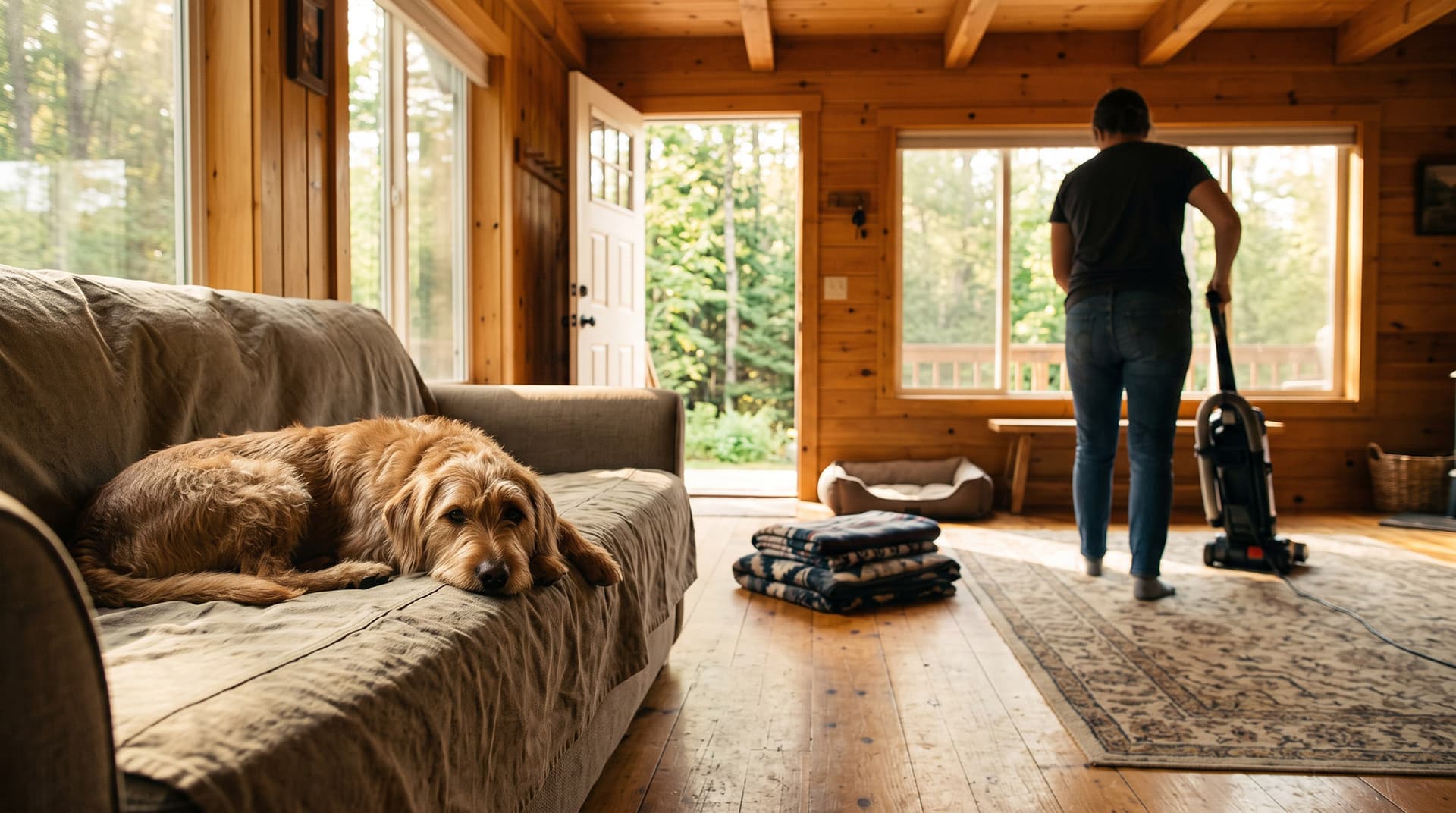
Most advice on whether to allow pets in your Airbnb is about money. More guests can book, pet owners may stay longer, and a pet fee adds a little to each booking. All of that can be true.
What the advice rarely covers is the person who deals with the result: your cleaner. A pet stay changes the turnover after it. It takes longer, it needs different work, and the next guest may be allergic.
This article looks at the decision from the cleaning side, because that is where pet-friendly listings tend to succeed or quietly fail.
Should you allow pets in your Airbnb?
Allow pets if your property suits them, your cleaner is on board, and your pet fee covers the extra work. If any of those three is missing, it will cost you more than it earns.
A quick way to decide:
- The property. Hard floors, washable covers and a yard make pet stays easier. Light carpet, delicate furniture and a fourth-floor condo make them harder. Check your building or HOA rules too, since some do not allow pets at all.
- The turnover gap. A pet stay followed by a same-day check-in leaves no extra time for the extra work. If most of your turnovers are back-to-back, pets add pressure to the tightest part of your schedule.
- Your cleaner. Some cleaners are happy to do pet turnovers for extra pay. Some will not. Some have allergies themselves. Ask before you change the listing, not after the first dog has stayed.
- Your next guests. Some guests choose a listing because it is pet-free, often because of allergies. Allowing pets means a more thorough clean every time, so that the next guest is not affected.
If the answer is yes, start small. Allow one dog under a size limit, for example, and see how the turnovers go before opening up further.
What does a pet stay do to your turnover?
It adds time, and it adds tasks a normal turnover does not include.
The extra work usually looks like this:
- Hair everywhere. Upholstery, rugs, under beds, in vents and along skirting boards. A normal vacuum pass often is not enough.
- Throws, covers and dog beds to wash. If you provide pet bedding or furniture covers, that is extra laundry, and it needs to dry before the next guest.
- Outdoor areas. Waste in the yard needs picking up before the next guest finds it.
- Smell. Some pet stays leave an odour that needs airing out or treatment, not just cleaning.
- Damage checks. Scratches on doors and floors, chewed items, and stains are easier to spot and photograph during the turnover than days later.
How much longer this takes depends on your property and the pet. Do not guess. Ask your cleaner to note the time on the first few pet turnovers and compare it with a normal one. That difference is the real cost of allowing pets, and it is the number your pet fee should be built on.
The extra time matters most when the next guest arrives the same day. Our guide to turnover clean windows covers how to plan the gap between guests so a longer clean still fits.
How long does pet dander affect allergic guests?
Longer than one turnover. According to the Asthma and Allergy Foundation of America, pet allergens can cause symptoms up to six months after the animal is gone, especially cat allergens.
People with pet allergies do not react to the hair itself. They react to proteins in the animal's dander (dead skin), saliva and urine. That matters for cleaning, because a house can look hair-free and still affect an allergic guest. The same source says these allergens cling to walls, fabric furniture and clothing, and get stirred back into the air once they settle.
So no turnover can promise an allergy-safe home after a pet stay. What a host can do:
- Say it in the listing. If you allow pets, say so clearly, so guests with allergies can choose somewhere else. That is fairer than a guest finding out on arrival.
- Use a vacuum with a HEPA filter on carpets, rugs and fabric furniture after every pet stay.
- Wipe with a damp or microfiber cloth, which stops dander going back into the air.
- Use washable covers and throws on fabric furniture, and wash them in hot water after pet stays.
- Allow your cleaner the extra time to do this properly, especially before a same-day check-in.
How much should you charge as a pet fee?
At least what the extra cleaning costs you, and no more than Airbnb allows.
According to Airbnb's pet fee rules, the fee can be set per booking, per night, per pet, or per pet per night, and one flat fee can cover several pets. It cannot be more than your nightly base rate. Airbnb also says the fee should only be used to cover the expected cleaning after hosting pets. Damage is a separate matter, handled through AirCover.
A simple way to set it:
- Time the extra cleaning a pet stay takes, using your cleaner's first few pet turnovers.
- Multiply that extra time by what you pay your cleaner.
- Add any extra laundry or supplies.
- That total is your floor. Charge at least that per stay.
For example, if a pet turnover takes your cleaner one extra hour and you pay $35 an hour, the extra labour is $35 per stay before laundry. Your own numbers will differ, which is the point of timing them.
A per-stay fee usually matches the work better than a per-night fee, because the extra cleaning happens once, at the end. A per-night fee can make sense for longer stays, where more hair and wear build up.
What should you agree with your cleaner first?
Pay, notice, and what "pet clean" means.
Pay. If a pet turnover takes longer, your cleaner should be paid for the extra time. The pet fee exists to cover exactly that. If you keep the fee and your cleaner absorbs the work, you are asking them to subsidise your pet policy, and that is a common reason good cleaners leave. See why good Airbnb cleaners quit.
Notice. Your cleaner needs to know which turnovers had a pet before they arrive, so they can bring the right equipment and allow the extra time. Your Airbnb calendar and its iCal feed show which nights are booked, not who or what is staying. The pet count lives in the booking details on Airbnb, so it is up to you to pass it on.
A pet checklist. Add a short pet section to your cleaning checklist: vents, under furniture, upholstery, pet bedding, the yard, and a damage walk-through with photos.
This is where pet turnovers usually go wrong. The cleaner arrives expecting a normal two-night stay, finds a house full of dog hair, and either rushes it or runs late for the next guest. A one-line message the day before, "the guests had a dog this time, allow extra time," prevents most of it.
GleamSync, a vacation rental cleaning coordination tool, handles the part of this that the calendar can tell it. It reads the iCal feeds from your Airbnb and VRBO listings, detects every turnover, and notifies your existing cleaner by email, SMS, or WhatsApp when a booking is added, moved, or cancelled. Your cleaner does not need an account or an app. The pet heads-up still comes from you, because the calendar feed does not include it.
What about service animals and emotional support animals?
Under Airbnb's rules, service animals are not pets, and they always stay for free.
Airbnb's pet fee page says service animals always stay for free, and that if a service animal damages your property you can still request payment through the Resolution Center under AirCover. Airbnb's help pages also say hosts cannot charge a pet fee or extra cleaning fee for animal hair to guests with service animals, or with emotional support animals in places where local law prohibits those fees.
So a guest arriving with a dog at a no-pets listing is not automatically breaking your rules. Check Airbnb's current accessibility policy and your local laws before you treat it as a violation. The cleaning still needs to happen, but the fee does not.
What if a guest brings a pet without permission?
Stay calm, document it, and keep everything on Airbnb.
- Message the guest through Airbnb. Ask about it politely. It may be a service animal, which changes everything above.
- Remind them of the house rules, and say plainly what happens next. Some hosts allow the pet to stay for the agreed pet fee. Others ask for the animal to leave.
- Warn your cleaner so the next turnover is planned with extra time.
- Photograph any damage or extra mess at checkout, before it is cleaned.
Collecting extra money is harder than it sounds. Airbnb's Resolution Center help page says the money request tool cannot be used to collect payment for pet counts, so an unpaid pet fee is not simply a matter of sending a request. Actual damage is a different matter and can be claimed through AirCover. Our guide to Airbnb guest damage claims covers the process and the deadline.
Your house rules should say clearly whether pets are allowed, and what happens if one arrives anyway. Our house rules template includes wording for this.
Frequently asked questions
Do pet-friendly Airbnbs get more bookings?
They can reach more guests, since some travellers only book places that take their pet. Whether that becomes more bookings depends on your market. Look at how many comparable listings near you allow pets before deciding.
Can I charge a pet fee on Airbnb?
Yes. Airbnb lets hosts add a pet fee per booking, per night, per pet, or per pet per night, as long as it is no more than the nightly base rate. Service animals always stay for free.
How do I keep my Airbnb clean for allergic guests after a pet stay?
You cannot make it fully allergy-safe, because pet allergens can linger for months. Vacuum carpets and fabric furniture with a HEPA-filter vacuum, wipe surfaces with a damp cloth, wash all covers and throws in hot water, and give your cleaner enough time. Most importantly, say clearly in your listing that pets are allowed, so allergic guests can decide before they book.
Should I pay my cleaner more for pet turnovers?
Yes, if they take longer. The pet fee is meant to cover the extra cleaning, so passing it on to the person doing the work is fair and helps you keep a good cleaner.
Can I refuse a service animal at my Airbnb?
Airbnb's rules treat service animals as not being pets, so a no-pets rule generally does not apply to them. Exceptions depend on Airbnb's accessibility policy and local law, so check both before refusing.
Related reading
- Turnover clean windows: how much time your cleaner needs
- Airbnb cleaning checklist
- Airbnb guest damage claims
- Airbnb house rules template
- Why good Airbnb cleaners quit, and how to keep yours
Pet stays need a cleaner who knows what is coming
A pet-friendly listing works when your cleaner knows about every turnover in time to plan for it. GleamSync reads your Airbnb and VRBO calendars and tells your existing cleaner about every turnover and every booking change, by email, SMS, or WhatsApp, with no account needed on their end. It costs $8 a month per property.
Share this article

Mark Fromson
Founder of GleamSync and vacation rental owner. Learn more
Related Articles
Airbnb cleaner no-show: what to do before your guest arrives
Airbnb cleaner no-show on turnover day? Set a deadline, work a backup list, tell the guest early, and fix the gap that caused it. A host's step-by-step plan.
Guest WiFi marketing for Airbnb hosts: 6 tools compared
Guest WiFi marketing for Airbnb hosts: what it is, where Airbnb's off-platform rules draw the line, what to look for, and six tools compared by who they suit.
Airbnb early check-in and late checkout: when to say yes
How to decide on Airbnb early check-in and late checkout requests, what to check before you answer, whether to charge, and reply wording that avoids promises.
Simplify Your Cleaning Coordination
Sync Airbnb, VRBO, Booking.com or any calendar with a link, notify your cleaners automatically, and never miss a turnover.
Start Free Trial